 Kisspeptin
$54.99Select options

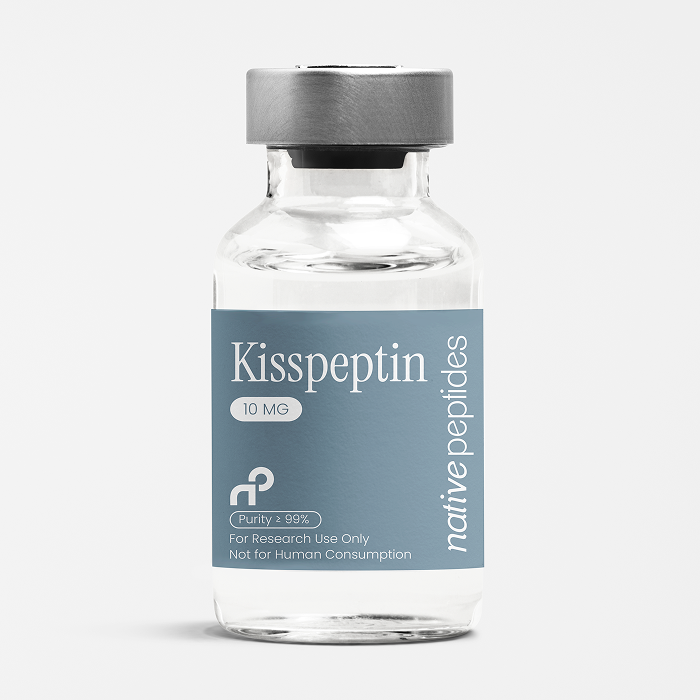

$54.99
This product is intended for laboratory research use only. Not for human consumption or clinical use.
Kisspeptin is a peptide encoded by the KISS1 gene and processed into several biologically active fragments, with kisspeptin-54 and shorter isoforms commonly utilized in laboratory research. Within experimental systems, kisspeptin functions as a key regulator of reproductive hormone signaling through activation of the GPR54 (KISS1R) receptor. Research applications frequently examine its role in hypothalamic signaling pathways governing gonadotropin release and endocrine communication in controlled preclinical models.
In laboratory environments, kisspeptin is employed as a molecular probe to study neuroendocrine regulation, reproductive axis signaling, and hormonal feedback mechanisms influencing gonadotropin secretion. Published studies describe kisspeptin’s involvement in neuronal signaling networks responsible for coordinating reproductive hormone regulation, puberty onset pathways, and metabolic reproductive interactions in experimental animal and cellular systems. Kisspeptin is widely discussed in scientific literature investigating peptide mediated communication between hypothalamic and pituitary systems within non clinical research settings. Observations regarding receptor activation, neuronal signaling, and downstream endocrine responses are derived exclusively from in vitro and animal research models and are reported as descriptive findings within controlled investigative contexts.
Each batch is tested and documented to support research transparency and consistent research workflows. Certificates of Analysis (COAs) are provided by batch so researchers can reference the specific analytical results tied to the exact lot associated with their order. This supports clearer recordkeeping, improved comparability across experiments, and stronger traceability over time.
Quality documentation is designed to help researchers confirm key batch attributes before use, including identity verification and purity results using established analytical methods such as HPLC and mass spectrometry where applicable. COAs typically include the batch identifier, test methods performed, and reported results, allowing researchers to maintain complete lab records and improve reproducibility across protocols and study timelines.
Every unit is associated with a batch identifier to support traceability and reproducible research. Batch tracking helps researchers link their materials to the exact analytical documentation for that production lot, which is important when comparing results across different runs, timelines, or study conditions. This also makes it easier to maintain clean lab records and verify continuity when repeating protocols.
Certificates of Analysis (COAs) are organized by batch so you can reference the specific results tied to the batch you received. To use this system, locate the batch number on the vial label or packaging and match it to the corresponding COA for that SKU. Save the COA and batch number alongside your research notes so your documentation stays complete and auditable over time.
High-Performance Liquid Chromatography confirms peptide purity and identity.
Molecular weight verification through advanced mass spec analysis.
LAL assay confirms endotoxin levels meet strict specifications.
All products on this site are for research and development use only. Products are not for human consumption of any kind. The statements made on this website have not been evaluated by the US Food and Drug Administration. The statements and the products of this company are not intended to diagnose, treat, cure, or prevent any disease.
Native Peptides is a chemical supplier. Native Peptides is not a compounding pharmacy or chemical compounding facility as defined under Section 503A of the Federal Food, Drug, and Cosmetic Act. Native Peptides is not an outsourcing facility as defined under Section 503B of the Federal Food, Drug, and Cosmetic Act.
All products are sold for research, laboratory, or analytical purposes only, and are not for human consumption.
Kisspeptin